
College students
A Personal CRM for College Students
Turn career fairs, office hours, internships, and alumni conversations into a small relationship system that helps you learn and follow through.
Updated

The useful job: turn a short career conversation into a next step you can actually remember.
A personal CRM for college students is a private record of who you met, what you learned, and the next respectful action. It keeps relationship context—not applications or a score of classmates.
College creates many weak ties. A professor mentions a former student in your field. A recruiter gives you an application tip. A supervisor explains which skill would make you more useful next summer.
The problem is rarely meeting nobody. It is letting every conversation dissolve into the same vague memory: I should follow up sometime.
If the category is new to you, read what a personal CRM is. This page focuses on the student workflow.
Keep relationships separate from applications
A personal CRM is not a job board and it is not your school’s career portal.
| Store in the relationship system | Store in an application tracker |
|---|---|
| Who you spoke with and how you met | Role title and job-posting URL |
| What you learned from the person | Application deadline |
| Advice you intend to use | Resume and cover-letter version |
| A promised introduction or resource | Submitted, interview, offer, or closed status |
| A human next step | Required documents and recruiting tasks |
This separation matters. A recruiter can remain a useful professional connection after one role closes. An alum who helps rule out a field has helped even when no application follows.
UC Berkeley’s career center defines an informational interview as a 20–30 minute conversation for learning, not a disguised job interview. Harvard’s career guide makes the same distinction and explicitly recommends an organized contact record with an action step, due date, referral source, history, and follow-up status.
A five-part college workflow
1. Begin with the next twelve people
Add the people connected to your current semester:
- two professors, teaching staff, or academic advisors;
- two former supervisors or campus-work colleagues;
- two alumni in fields you are exploring;
- two recruiters or professionals from upcoming events;
- two classmates or club leaders whose work you respect;
- two people you already owe an update or thank-you.
Twelve is a starting size, not a success metric. Five is enough if that is what you can maintain thoughtfully.
2. Research before you ask
Read the person’s profile, the organization’s site, and enough about the field to avoid asking for facts a search could answer. Prepare three open questions. Explain how you found the person and ask for information or advice—not a job.
Useful questions include:
- What does an ordinary week in this role contain?
- Which entry-level skills are difficult to teach?
- What would you try during college if you were exploring this field now?
Use the CRM for preparation, not impersonal mass outreach.
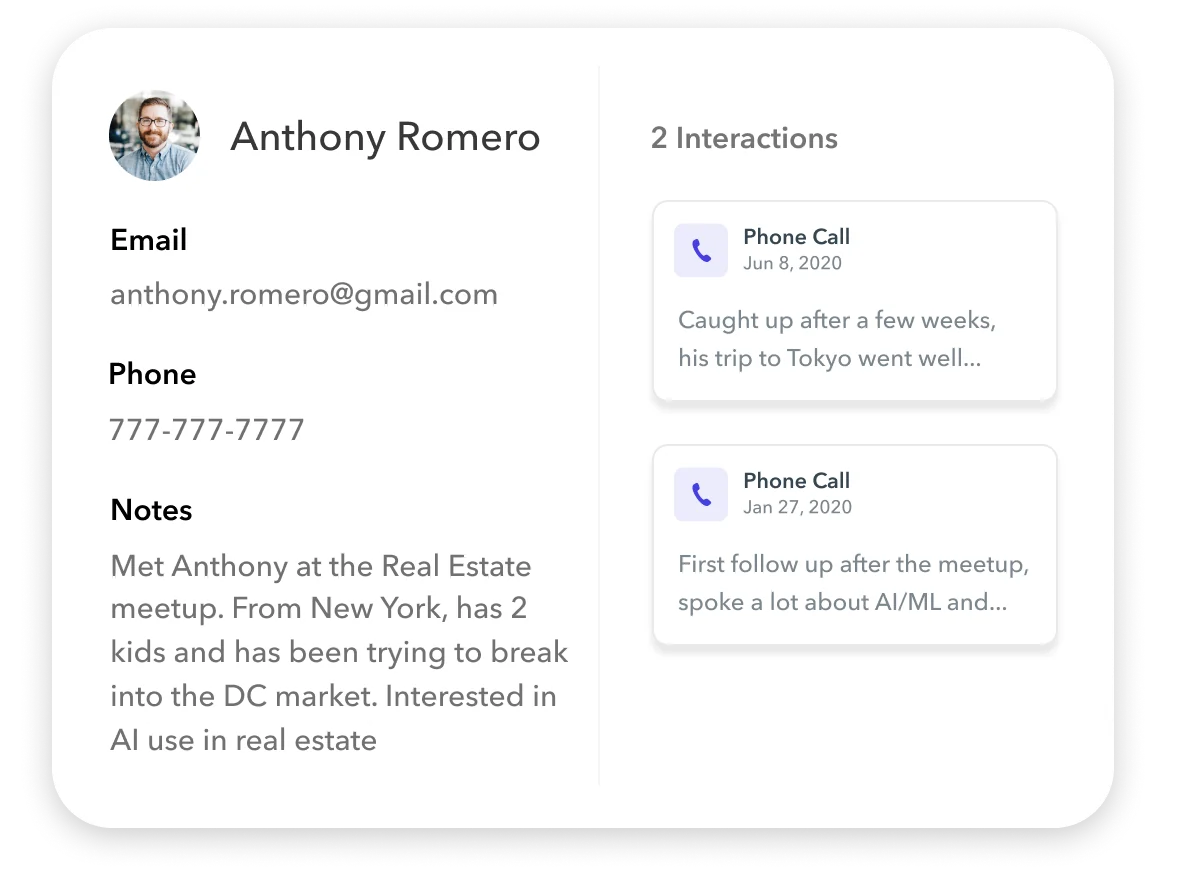
3. Capture three things after the conversation
Within a few minutes, record:
- The useful idea: what changed or became clearer?
- The commitment: what did you say you would do?
- The continuation: when would another message be welcome?
At a career fair, step aside and write one sentence before the next booth. University of Washington guidance recommends brief post-conversation notes to support follow-up.
4. Thank them while the conversation is still recognizable
Berkeley recommends a thank-you within one or two days. Mention one concrete point and the action it prompted. “Thanks for your time” is polite. “Your explanation of customer research changed the class project I chose” gives the person evidence that the time mattered.
Apply through the requested channel. A warm conversation does not replace the application.
5. Review once a week
Spend ten minutes on Friday or Sunday:
- send overdue thank-yous and complete promises;
- prepare for next week’s conversations;
- close irrelevant reminders;
- choose one person who deserves an update.
Do not schedule empty “checking in” messages. Follow up when you used advice, finished a project, learned something relevant, or can offer a useful resource.
Suggested fields, groups, and cadence
| Part of the system | Suggested setup |
|---|---|
| Essential fields | How we met; school connection; role or field; last conversation; useful advice; next action; action date |
| Optional fields | Pronunciation; location; preferred contact method; topics they invited you to ask about |
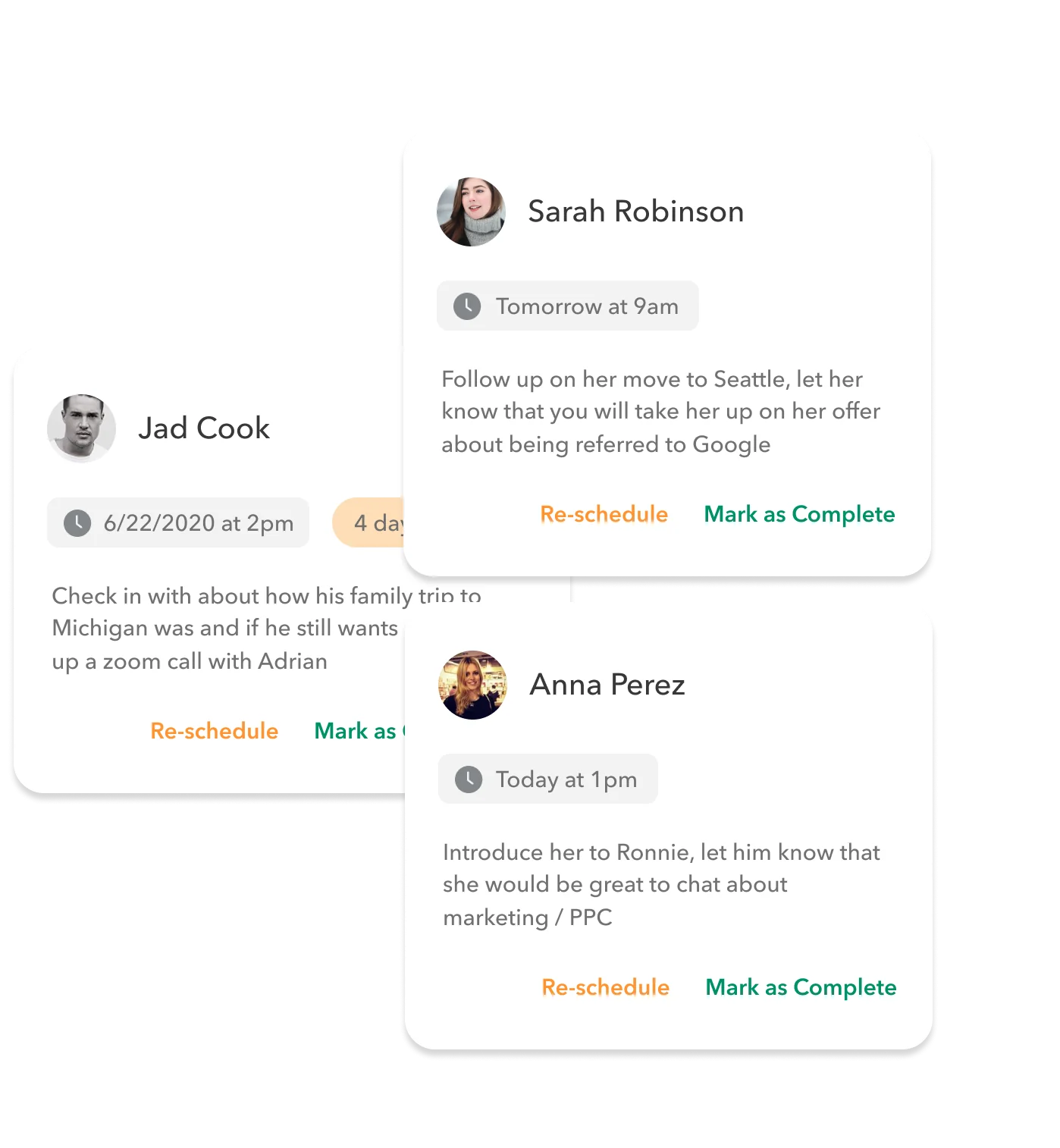
| Groups | Campus mentors; alumni; career fairs; former supervisors; internship team; fields I am exploring |
| Immediate cadence | Note after the conversation; thank-you within 1–2 days |
| Review cadence | Ten minutes weekly during an active search |
| Long-term cadence | A real progress update once a semester when the relationship warrants it |
Do not store gossip, health details, protected characteristics, private family information, or anything you would be uncomfortable explaining to the person.
Mogul Basic currently lists people and interactions. Mogul Pro adds groups, custom fields, and reminders. Those features can support the structure above, but a spreadsheet or another tool can also work. The personal CRM shortlist compares different capture and privacy approaches.
Mini-example: after the engineering fair
Fictional example: Jordan, a second-year mechanical-engineering student, speaks with Elena, a manufacturing engineer, at a campus fair.
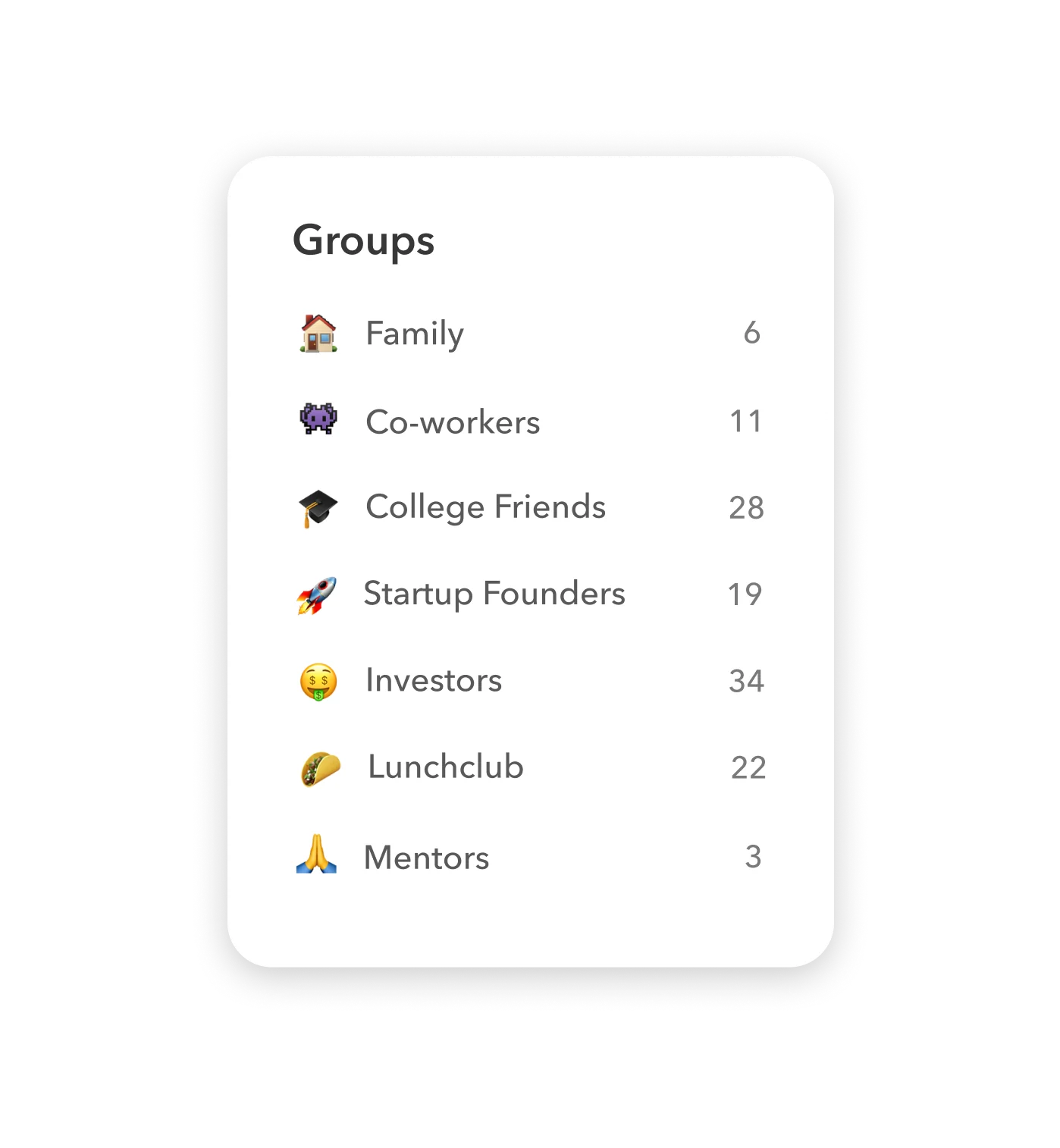
Jordan does not write “great contact at aerospace company.” The record says:
- Met: Fall engineering fair, composites booth
- Learned: Entry-level candidates can distinguish themselves by explaining one manufacturing trade-off, not only the final design
- Promised action: Revise the solar-car project description to explain material choice
- Next step: Send revised portfolio link with thank-you by Thursday
- Later update: If the team completes testing, share the result near semester end
The next message has a reason. Jordan still applies through the official portal, but the record remains useful even if the application does not advance.
Mistakes that make the system worse
- Collecting names without a purpose. Volume can hide the five conversations that need action.
- Asking every alum for a referral. Learn first. Let trust and fit determine what follows.
- Automating personal outreach. Templates can help you begin, but the observation that makes the message worth reading must be yours.
- Treating classmates as future assets. They are peers now. Help with the interview practice, share the resource, and be a good teammate.
- Ignoring the career office. School and employer systems remain the source of truth for recruiting rules.
- Letting tracking replace doing. Research the company, improve the project, submit the application, and prepare for the interview.
When not to use a personal CRM
Skip it if a calendar and short note keep you reliable. Stop if you spend more time categorizing people than speaking with them.
For a focused internship workflow, see Mogul for interns. Students headed toward law school can use the law-student workflow. For the broader search, use the job-search page alongside your campus resources.
Frequently asked questions
How many people should a college student track?
There is no ideal number. Begin with five to twelve people tied to the work you are doing this semester. Add someone when you have a reason to remember the context or a next step.
Should I import all my LinkedIn connections?
Only if automatic capture solves a real problem. If you import, inspect duplicates, permissions, and later exportability.
How often should I contact a recruiter or alum?
Follow the timeline they gave you. Otherwise, thank them promptly and return when you have relevant progress, a thoughtful question, or something useful to share. A recurring reminder is a prompt to think, not permission to send a generic message.
Is it strange to take notes about people?
It depends on what you write. Recording advice, a promised action, and where you met can make you more respectful. Secret judgments and sensitive personal details do the opposite. Use the test: would you be comfortable if the person saw the note?
Will a personal CRM get me an internship?
No. It can help you follow through on career conversations. Skills, experience, application quality, eligibility, timing, and the employer’s process still determine the outcome.
Your next useful action is probably not importing 2,000 contacts. It is sending the one thank-you you already owe.