
MBA students
A Personal CRM for MBA Students
Keep coffee chats, alumni advice, recruiting events, classmates, and career pivots connected without turning an MBA network into a sales pipeline.
Updated

The useful job: preserve continuity while your career story is changing faster than your contacts can follow it.
A personal CRM for MBA students is a relationship-memory system for classmates, alumni, recruiters, advisors, and colleagues across career exploration. It keeps conversation context and promises separate from recruiting stages and deadlines.
An MBA network spans classmates, former colleagues, alumni, faculty, club peers, recruiters, advisors, and internship teammates.
The conversations overlap. One alum explains a function. Another compares companies. A classmate makes an introduction. Two months later, you need to remember which advice came from whom—and whom you promised to update.
Start with the plain-English personal CRM guide if you need the category basics, then use these MBA networking tips for the conversation and follow-through itself. This page is about the MBA version of the habit.
The MBA job-to-be-done is a learning loop
Current career pages from Kellogg and Wharton describe a job search spread across coaching, coffee chats, company presentations, career treks, clubs, conferences, alumni, second-year peers, internships, on-campus recruiting, and just-in-time opportunities.
That creates two systems:
| Relationship memory | Recruiting operations |
|---|---|
| Who helped you understand a function or company | Role, location, deadline, and application link |
| The advice or perspective they gave | Resume version, interview stage, and decision date |
| Who introduced you | School policy and employer instructions |
| What you promised to do | Case prep, assessment, and document tasks |
| When an update would be useful | Submitted, interview, offer, declined, or closed |
School and employer systems remain authoritative for applications. Use the personal record for the context a job tracker cannot hold.
Build the system around questions, not companies
Company groups expire quickly. Learning questions survive the recruiting cycle.
Start with questions such as:
- Which parts of product management reward my operating background?
- How do post-MBA healthcare roles differ across settings?
- Which climate roles use commercial rather than technical skills?
Add people who can help compare answers. One experience is not the truth about an industry.
Wharton describes industry advising, employer relationships, clubs, conferences, treks, alumni, and second-year fellows. Kellogg similarly frames the first year around exploration, coffee chats, peers, and alumni mentors. Keep those contexts distinct.
A practical MBA relationship workflow
Before a conversation
Record why the person is relevant and what you cannot learn publicly. Prepare two questions and a short description of your current hypothesis. Note who introduced you.
At an event, choose the conversations that can resolve an actual uncertainty.
Immediately after
Capture four lines:
- Their perspective: the useful claim or distinction they made.
- Your interpretation: how it changes your search.
- The commitment: the action or introduction you agreed to.
- The next honest reason to write: a thank-you, result, question, or useful update.
Separate attributed advice from fact. Verify claims that will shape a major decision.
During the weekly review
During active recruiting, review the system once a week:
- send promised materials and close stale actions;
- compare conflicting advice;
- prepare for the next event or interview;
- help one classmate or contact;
- move application tasks back to the job tracker.
After recruiting, reduce the cadence. The relationship should not receive a monthly ping simply because the software can schedule one.
Suggested fields, groups, and reminder cadence
| Part of the system | Suggested setup |
|---|---|
| Essential fields | How we met; introduction source; current role; industry/function; last conversation; advice; next action; recruiting boundary |
| Useful MBA fields | Career hypothesis discussed; geography; former employer or program connection; willingness to speak again; advice to verify |
| Groups by relationship | Classmates; alumni; former colleagues; faculty; recruiters; career advisors; internship team |
| Groups by learning | Exploring product; healthcare operators; search funds; climate; founder path; investor perspective |
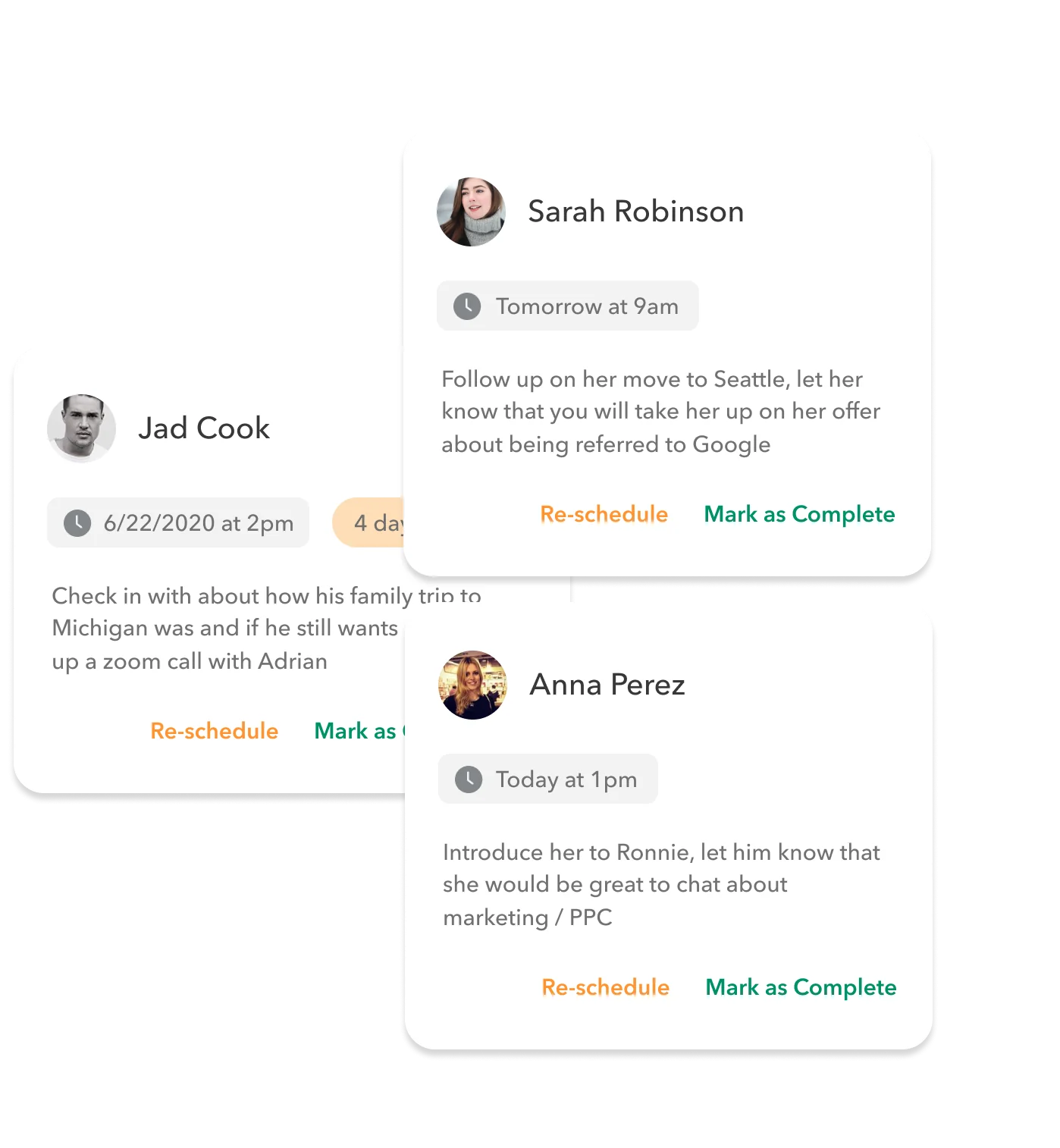
| Immediate reminders | Thank-you; promised introduction; material the person requested |
| Weekly review | One fixed 15-minute block during active recruiting |
| Long-term review | Milestone-based updates after an internship, role decision, useful project, or meaningful change |
Avoid confidential compensation, protected interview questions, gossip, protected characteristics, private family details, or a classmate’s outcome without permission.
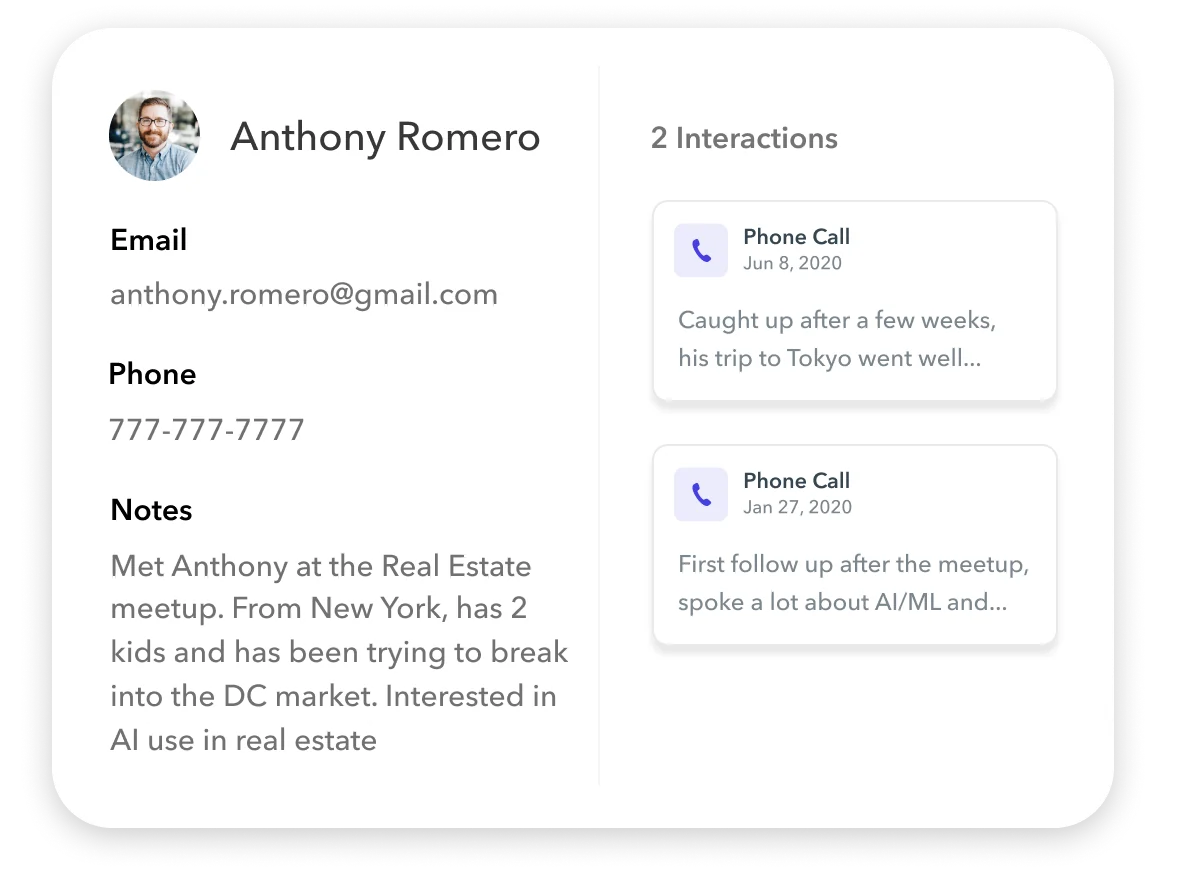
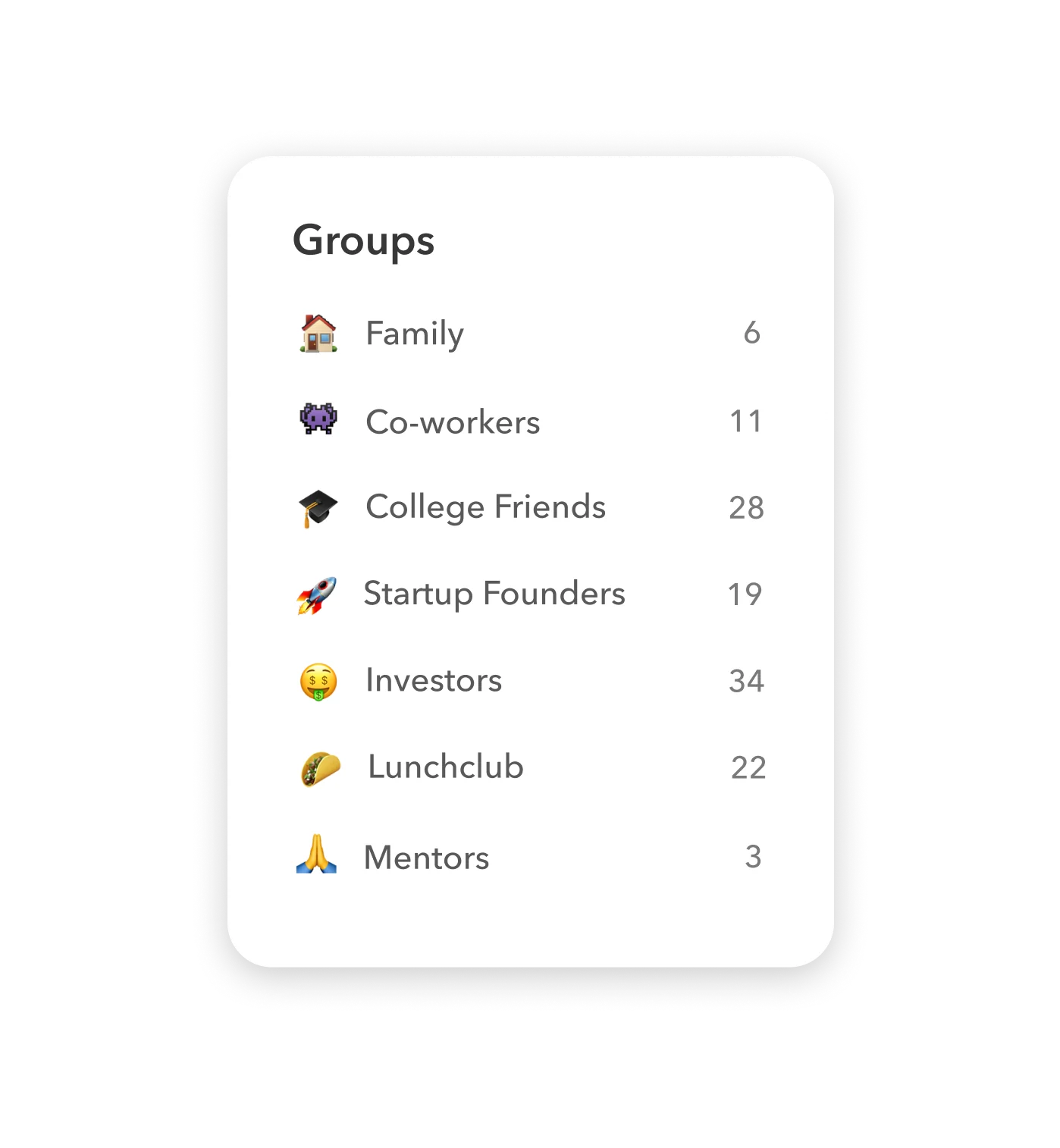
Mogul Basic publicly lists people and interactions. Pro adds groups, custom fields, and reminders. The workflow does not depend on one product, however. Compare capture, team, privacy, and export models in the personal CRM shortlist.
Mini-example: a healthcare-to-product pivot
Fictional example: Maya enters her MBA after working in hospital operations and is exploring health-tech product roles. A career trek introduces her to Luis, an alum who moved from consulting into product strategy.
Her relationship record says:
- Context: Health-tech trek; introduced after payer/provider panel
- Question tested: Does operating experience compensate for limited software shipping experience?
- Perspective: Luis suggested demonstrating structured customer discovery and cross-functional decision-making
- Action: Reframe clinic scheduling project around user research and trade-offs
- Referral: Second-year student who completed a product internship
- Next step: Thank Luis tomorrow; share revised project story only after career-coach review
The record preserves the learning. If Maya decides against product, the conversation still improved her judgment and can continue without a transaction.
Use classmates differently
Classmates see how you work under uncertainty—whether you share, improve a team, and follow through. Keep commitments if a record helps, but never score classmates by future usefulness.
Good network behavior is ordinary: make the introduction, rehearse the case, share the role, and celebrate someone else’s outcome.
If you are building a company, the startup-founder workflow offers a different way to separate investors, candidates, mentors, and peers. If investor relationships are central, see the investor use case.
Mistakes and when not to use a CRM
- Treating every coffee chat as an audition. Some of the most valuable conversations should disqualify a path.
- Asking for an introduction before using the first person’s advice. Show follow-through before requesting more access.
- Tracking prestige instead of relevance. A recent graduate may understand your decision better.
- Mixing employer instructions with memory notes. Use the official recruiting source for dates and process.
- Automating personal follow-up. A scheduled reminder can prompt thought; it should not send relationship theater.
- Keeping sensitive recruiting intelligence. Do not move confidential information into a personal tool.
- Optimizing the database during interview week. Prepare for the interview.
Skip it if school systems, a calendar, and a short list keep you reliable. Stop if maintenance competes with coursework, sleep, or conversation.
Frequently asked questions
Should an MBA personal CRM include every classmate?
No. Add people when continuity would make you more reliable: a commitment, a meaningful conversation, a project history, or a future update. Your class roster is not a relationship record.
Is this the same as a recruiting pipeline?
No. A recruiting pipeline tracks roles and stages. The personal CRM tracks people, conversations, advice, referrals, and commitments across many possible roles.
How soon should I follow up after a coffee chat?
Send a concise thank-you while the conversation is fresh, usually the same day or next day. If the person gave a specific timeline, follow it. Later messages should carry progress or value rather than a generic check-in.
Should I set recurring reminders for alumni?
Only when the cadence reflects a real relationship. Kellogg’s alumni program, for example, uses student-directed 30-minute conversations and controls active requests to respect advisor capacity. For most new contacts, tie the reminder to promised progress instead of an arbitrary monthly schedule.
Can a personal CRM replace my career coach or school platform?
No. Career professionals and official systems remain the source of truth. The CRM only remembers what was said and agreed.
The MBA network becomes valuable when it stops being an MBA network and becomes a set of relationships you continued to deserve.