
Finance networking without the contact chase
Networking in Finance: A Practical Coffee-Chat System
A practical finance networking workflow: choose the right conversations, ask informed questions, follow through, and keep useful context without chasing contact volume.
 Chris Raroque
In this guide
The short answer: Networking in finance is a research practice. Choose a question about the work, find someone whose experience can help answer it, show that you prepared, and follow through on what you promised. A smaller set of relevant conversations is more useful than a large pile of connections you cannot place.
Finance is not one job. Research, wealth management, investment banking, risk, sales and trading, operations, and financial technology reward different skills and lead to different working days. CFA Institute’s current career-path overview separates analytical, client-facing, and transaction-focused skill families for a reason: “What is finance like?” is too broad to produce a useful answer.
The five practices below turn networking into a way to test a career hypothesis. They do not guarantee an interview, a referral, or a job. They should leave you better informed even when the conversation leads nowhere else.
If you are managing an active search, use the fuller job-search relationship workflow to keep people and conversations separate from applications and deadlines.

1. Choose the question before the person
The weakest networking plan starts with names: find bankers, find investors, find managing directors. The stronger plan starts with uncertainty.
Write down one question you need evidence to answer:
- Do I prefer company research or client advisory work?
- What does an analyst actually own during a live transaction?
- Which technical skill would make me useful in my first 90 days?
- How does a risk team challenge an investment decision?
- What changes when someone moves from a large institution to a smaller firm?
Now look for people with different vantage points on that question. The question is your filter; seniority is not.
This matters because a job title can hide more than it reveals. Two people called “analyst” may work with different clients, data, products, and decision cycles. A conversation is useful when it reduces a specific uncertainty—not when the other person’s title looks impressive in your inbox.
Match the person to the question
CFA Institute’s student networking guide suggests that junior professionals are well placed to explain technical skills, software, and day-to-day work, while senior professionals can offer a wider view of leadership, hiring, and career decisions. Treat that as a way to diversify perspective, not a hierarchy of importance.
| Perspective | Useful questions | What not to assume |
|---|---|---|
| Student or peer entering the field | How did you prepare? What surprised you in recruiting? | Their recruiting experience predicts yours |
| Analyst or associate | What does a normal week contain? Which skills matter on real work? | They can speak for every team at the firm |
| Manager or senior practitioner | What distinguishes strong early-career hires? How does responsibility change? | They control an open role or owe you access |
| Someone in an adjacent function | Where do your teams collaborate or disagree? What does a handoff look like? | Their view of another function is complete |
| Former colleague, teacher, or classmate | Who could help me understand this question from another angle? | Familiarity makes an introduction automatic |
Build a list of six to ten possible conversations around one question. Include people you already know. Penn Career Services’ networking guidance recommends starting with existing contacts and treats informational interviews as learning conversations rather than disguised job requests.
2. Research enough to make the ask specific
“Can I pick your brain about finance?” transfers all the work to the recipient. A useful message explains your context, names the question, and shows why this person is relevant.
Before writing, spend ten minutes on three things:
- Their path: role changes, function, and any transition relevant to your question.
- Their environment: what the firm or team publicly says it does. Use official pages, filings, or published work rather than guessing from a title.
- Your learning gap: the one thing you cannot answer through public research.
Do not manufacture familiarity. “I saw that you moved from credit research to portfolio strategy” is useful if it is true and relevant. “I have always admired your inspiring journey” is generic praise wearing a personalized hat.
Here is an editable starting point, not a message to send unchanged:
Subject: Question about moving from credit research to portfolio strategy
Hi Jordan — I am a second-year economics student comparing research and portfolio-facing roles. I saw that your path included both credit research and portfolio strategy. I have read the public role descriptions, but I am still trying to understand how the decision cadence and stakeholder work differ in practice. Would you be open to a 20-minute call in the next few weeks? No problem if the timing is not workable.
The message works because the recipient can answer three questions quickly: Who is this? Why me? What would saying yes involve?
On LinkedIn, a shared school, event, group, or professional context can make a connection request legible. LinkedIn’s current network-building guidance also presents following as an option when a connection would be premature. Its invitation-restriction guidance warns that high volumes of ignored, spam-like, or automated requests can lead to restrictions. That is a product rule and a useful human rule: relevance does not scale through bulk automation.
3. Run the coffee chat as a comparison, not an interrogation
A coffee chat should feel like a conversation with a purpose. Bring five questions; expect to ask three. Listen well enough to follow an interesting answer away from your list.
Start with their present work before asking for a life story:
- What kinds of decisions take most of your attention in a normal week?
- Which part of the role is hardest to understand from the outside?
- Where does your team depend on another function?
- What separates a technically capable early-career hire from a genuinely useful one?
- Which skill did you underestimate before entering the role?
- When you changed functions, what became easier and what became harder?
- If you were testing my career question, whom else would you learn from: a client-facing person, an operator, or another investor?
These are prompts, not magic phrases. Replace them with questions that follow from your research.
CFA Institute’s student guide is direct about two common mistakes: asking generic questions that public research could answer and immediately asking for a job, internship, or referral. Avoid both. An informational conversation can eventually reveal an opportunity, but extracting one is not the price of the other person’s time.
Use a simple before, during, after workflow
Before: confirm the time and time zone, reread why you contacted them, and write your learning question at the top of the page.
During: introduce your context in less than a minute, ask permission before taking detailed notes, and leave space for the other person to redirect your assumptions. Keep to the agreed time unless they explicitly extend it.
After: send a thank-you that names one useful idea and any action you promised. If they suggested a resource, read it before asking for more help. If they offered an introduction, give them a short, accurate paragraph they can forward—but only after they confirm the offer.
The goal is not to demonstrate that you know finance vocabulary. It is to leave with a more precise model of the work.
4. Keep a five-line record and close the loop
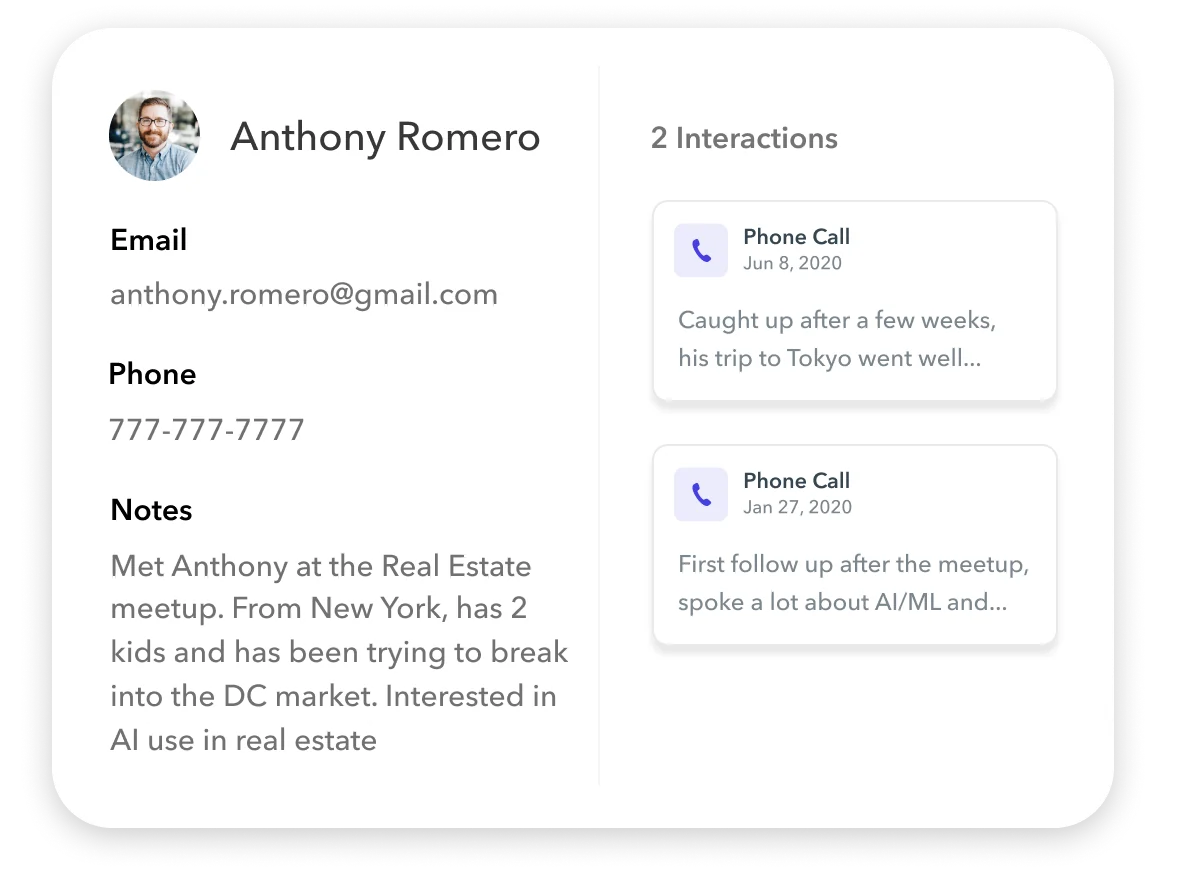
Memory is generous immediately after a conversation and unreliable three months later. Record enough context to act with continuity, but not so much that the relationship becomes a surveillance file.
Use five lines:
| Field | What to record |
|---|---|
| Why we spoke | The career question and relevant context |
| What I learned | Two or three ideas in your own words |
| What I promised | A thank-you, update, resource, or introduction |
| What they offered | Only what they explicitly offered—not what you hope they meant |
| Next considerate step | A dated action or a reason to leave the conversation complete |
This can live in a notebook, spreadsheet, calendar, or personal CRM. The tool matters less than retrieval. You should be able to answer, before contacting someone again: What did we discuss? What did I do with the advice? Is there a real reason to write now?
An initial thank-you should usually happen while the conversation is still fresh. A later update needs substance. “You suggested I compare a client call with a research review; I did both, and it changed the roles I am targeting” is a close-the-loop message. “Just circling back” is a notification with no gift inside it.
Do not create an arbitrary recurring reminder for every person. Set one when there is a promise, a known milestone, or a natural update. Otherwise, let a completed conversation be complete.
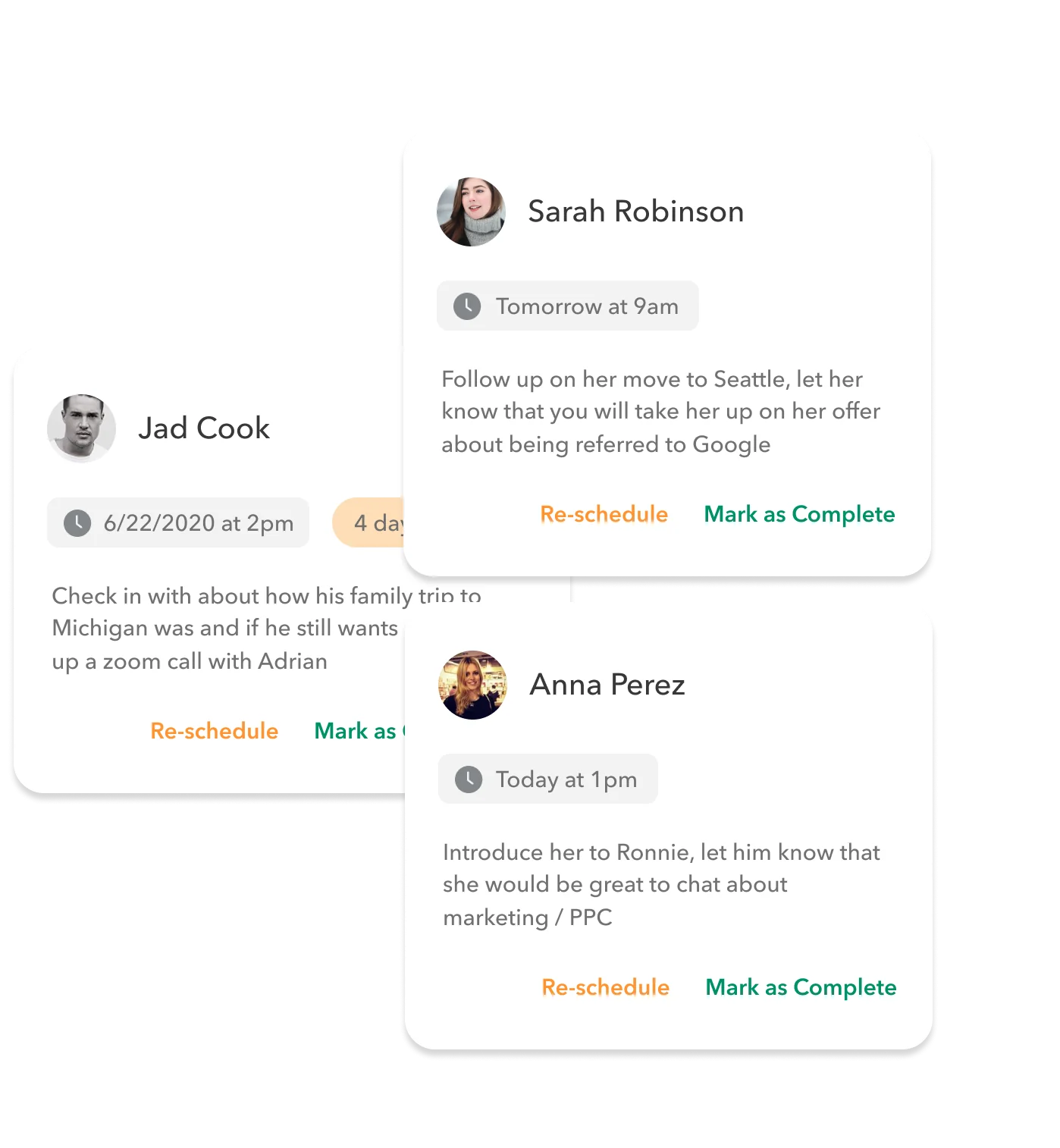
If a searchable relationship record would help, learn what a personal CRM does and compare the current source-checked app shortlist. A spreadsheet plus calendar is enough for many people.
5. Build a small evidence loop
Networking becomes useful when one conversation changes the next one. Run it as a three-conversation sprint:
- Pick one career question.
- Speak with three people who see it from different roles or levels.
- After each conversation, write what the answer confirmed, contradicted, or left unresolved.
- Change the next set of questions based on the evidence.
- Send an update to anyone whose advice you acted on.
Consider a fictional example. Amara thinks she wants equity research because she enjoys company analysis. Her first conversation is with a recent research associate, who explains the writing, earnings cadence, and pressure to defend a view. Her second is with a wealth-management analyst, who describes translating market ideas into client decisions. Her third is with a risk professional, who explains how assumptions are challenged across portfolios.
Amara does not finish with “finance seems interesting.” She learns that she likes analytical work but wants more direct client context. She changes the roles she researches and thanks the three people with a short note explaining what changed. No one had to provide a referral for the sprint to work.
Review for signal, not activity
At the end of the sprint, do not count connections. Ask:
- Which assumption changed?
- Which role or environment deserves deeper research?
- Which skill gap appeared more than once?
- Did I complete every promise I made?
- Is another conversation necessary, or can I make a decision now?
The finish line is clearer judgment, not permanent outreach.
What should you never put in a networking record?
Do not store confidential deal information, material nonpublic information, credentials, government identifiers, compensation details someone did not ask you to retain, health information, rumors, or private facts that are irrelevant to your relationship.
Finance roles can also be subject to employer rules on communications, recordkeeping, conflicts, and data handling. Your personal system does not override those rules. Keep regulated or work-owned information in approved systems, follow your firm’s policies, and ask compliance when the boundary is unclear.
A practical test is simple: would you be comfortable telling this person what you saved and why? “I noted the article you recommended and that I promised an update” is easy to explain. A dossier of sensitive details is not.
What if traditional networking drains you?
You do not need to become a room-circling extrovert. CFA Institute’s guidance for different networking styles recommends preparation and smaller formats for people who prefer depth, while reminding more outgoing networkers to listen and be selective.
Choose a format that lets you be attentive: one-to-one calls, a small alumni discussion, a technical volunteer project, a class, or a focused event session. The standard is not visible sociability. It is a useful exchange you can sustain.
Frequently asked questions
How many finance coffee chats should I schedule?
There is no universal quota. Start with three conversations around one decision. If the third conversation is repeating the first two, stop collecting calls and act on what you learned. A smaller number of prepared conversations is better than a calendar full of vague ones.
Should I ask for a referral during the first conversation?
Usually, no. Ask for perspective first. If a role is relevant later, you can ask whether they would be comfortable advising you on the application or discussing a referral. Make it easy to decline and never imply that the earlier conversation created an obligation.
What if someone does not reply?
Send one brief follow-up that adds context or offers easier timing. Then stop. Silence can mean workload, leave, inbox volume, or lack of interest; it is not permission to pursue them across every channel.
Do I need LinkedIn Premium or a CRM to network in finance?
No. Email, basic LinkedIn features, a spreadsheet, and a calendar can support the entire workflow. Use paid search or relationship software only when it removes a real constraint, and verify current plan terms before buying.
How do I turn a networking conversation into a long-term professional relationship?
Do something with the advice, honor every promise, and update the person when there is a meaningful result. Contribute when you genuinely can. Long-term relationships grow from repeated relevance and trust—not a perfectly timed reminder sequence.
The finance networking checklist
Before the next message goes out, check six things:
- I can state the career question in one sentence.
- This person’s experience is relevant to that question.
- I researched what is already public.
- My ask has a clear time boundary and is easy to decline.
- I am not opening with a job or referral request.
- I have a place to record advice, promises, and the next considerate action.
That is enough structure. The work after that is human: pay attention, tell the truth about what you need, and close the loop.